Iraq’s Oil Collapse Sparks Race for New Export Routes
Strait of Hormuz Crisis Triggers Global Fertilizer Supply Shock Simon Watkins is a former senior FX trader and salesman, financial journalist, and best-selling author.
He was Head of Forex Institutional Sales and Trading for… April was indeed the cruellest month for decades for Iraq’s crude oil production, with an average of 1.389 million barrels per day (bpd) over the period.
This compares to a monthly average of 3.47 million bpd from January 2002 to the end of March this year, and an average of over 4.1 million bpd in the three months leading up to the onset of the U.S./Israel-Iran War on 28 February.
The last time oil production fell to the current level in the country was in the early 2000s, during and immediately following the 2003 U.S.-led invasion.
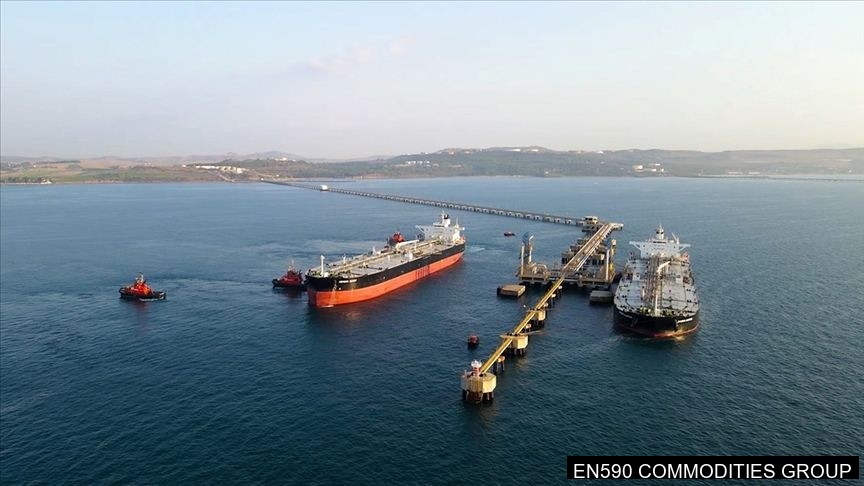
Even for a diversified economy, this would spell bad news, but for Iraq, it is existential, with over 90% of its annual budget historically coming from oil and around 95% of that black gold having to pass through the still-blockaded Strait of Hormuz before it is monetised.
The effective closure of that key export route meant that Iraq’s domestic oil storage tanks quickly filled to maximum capacity, and because it has extremely limited options to transport its crude elsewhere, it has been forced to shut down production wells entirely.
As disastrous as it is now, even worse may be to come soon, as these shutdowns can cause permanent damage to wells through a loss of reservoir pressure, water infiltration, and corrosion, among other factors.
In Iraq’s case, many of its biggest mature southern fields are highly susceptible to these problems.
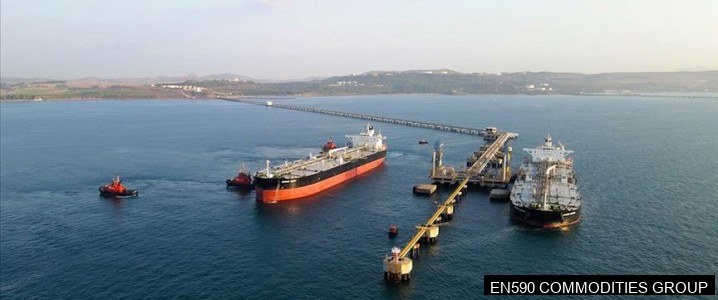
This is why the race has been on in Baghdad to secure other export options, most notably now, pipeline options in the north, but these bring their own sets of problems with them.
Historically, moving oil from the southern part of Iraq administered by the Federal Government of Iraq (FGI) in Baghdad was a largely redundant exercise, with little demand for it from Europe that was not already being filled by oil coming from the country’s semi-autonomous northern region, presided over by the Kurdistan Regional Government (KRG).
Instead, the onus of the FGI’s export drive was to the East, especially to China -- a route involving the Strait of Hormuz.
This was also a pivotal means by which sanctioned Iranian crude oil could be surreptitiously transported to the same destination, rebranded as non-sanctioned Iraqi oil, with all elements involved in this mechanism analysed in full inmy latest book on the new global oil market order.
| Product | Price | Change |
|---|---|---|
| Brent Crude | $102.14/bbl | +0.34% |
| WTI Crude | $96.90/bbl | +0.21% |
| EN590 Diesel | $846/MT | +0.18% |
| Jet Fuel A-1 | $1090/MT | +0.55% |
| Mazut M100 | $450/MT | -0.15% |
| Bitumen 60/70 | $470/MT | +0.08% |
| Sulphur Gran 99.5% | $470/MT | -0.44% |
| Urea 46% Gran | $650/MT | +1.12% |
| NPK 16-16-16 | $460/MT | -0.28% |
| Nat Gas TTF | $15.42/MMBtu | +0.92% |
Comments
Post a Comment