StanChart Says Record SPR Withdrawals Are Tightening U.S. Oil Buffers
Norway’s Offshore Oil Production Beats Forecasts in April Alex Kimani is a veteran finance writer, investor, engineer and researcher for Safehaven.com.
Back in March, the 32 member countries of the International Energy Agency (IEA) unanimouslypledgeda record-breaking release of 400 million barrels of crude oil from their Strategic Petroleum Reserves (SPR) shortly after Iran’s blockade of the Strait of Hormuz triggered oil price spikes, more than double the 182.7 million barrels released during the 2022 response to the Ukraine war.As usual, the United States shouldered the lion’s share of the release, committing to 172 million barrels.
For the first batch, the Department of Energy (DOE)awardedcontracts to eight companies for the sale of 45.2 million barrels from sites in Texas and Louisiana on March 20.
And now commodity analysts at Standard Chartered have reported that the pace of withdrawals from the U.S.
Strategic Petroleum Reserve has accelerated sharply, with the latest data revealing the largest weekly decline on record.
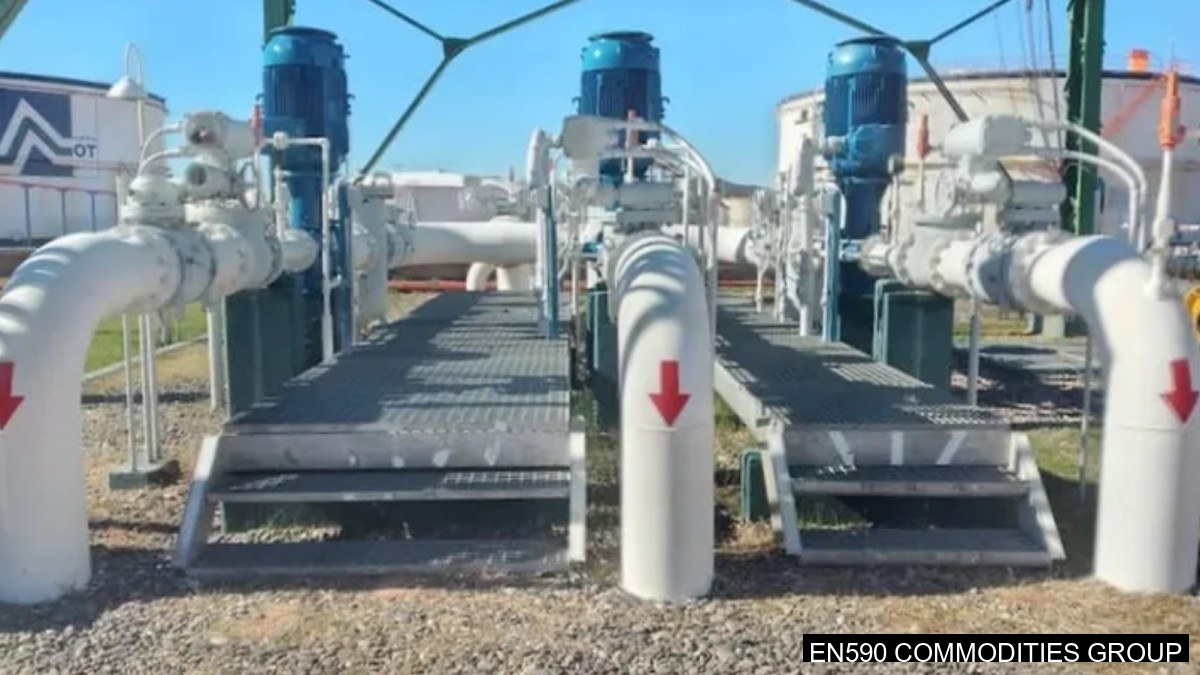
SPR inventories fell by 9.9 million barrels (mb) in the week ended 15 May, following a decline of 8.6 mb the previous week, taking total SPR volumes down to 374 mb and quickly approaching operational stress limits.
The physical infrastructure of the SPR limits withdrawal capacity to a maximum rate of 4.4 mb/d, while the operational minimum is a statutory limit of 150 mb.
The analysts note that the current programme is being executed much more rapidly and alongside a larger global emergency response.
However, StanChart says that many of the numerous mechanisms implemented to reduce the near-term supply/demand imbalance are only temporarily viable, implying that near-term dampening of physical oil prices is only temporary with a resumption of the imbalance likely to pull financial contracts higher.
Related: IEA: Oil Shock Sparks Surge in EV Sales Oil prices continue to be largely headline-driven, taking direction from escalation and de-escalation in the US-Iran conflict in the near term.
Oil prices moved sharply lower on Wednesday after U.S.
President Donald Trump announced that the United States is in the "final stages" of negotiations with Iran to end the conflict.Brent crudefor July delivery fell 5.9% to trade at $104.71 per barrel at 14.00 m ET on Wednesday, while the corresponding WTI crude contract declined 6.1% to trade at $97.90/bbl.


| Product | Price | Change |
|---|---|---|
| Brent Crude | $102.14/bbl | ▲ +0.34% |
| WTI Crude | $96.90/bbl | ▲ +0.21% |
| EN590 Diesel | $846/MT | ▲ +0.18% |
| Jet Fuel A-1 | $1090/MT | ▲ +0.55% |
| Mazut M100 | $450/MT | ▼ -0.15% |
| Bitumen 60/70 | $470/MT | ▲ +0.08% |
| Sulphur Gran 99.5% | $470/MT | ▼ -0.44% |
| Urea 46% Gran | $650/MT | ▲ +1.12% |
| NPK 16-16-16 | $460/MT | ▼ -0.28% |
| Nat Gas TTF | $15.42/MMBtu | ▲ +0.92% |
Price alerts · Industry news
Comments
Post a Comment