Why U.S. Drillers Can’t Solve the World’s Oil Supply Crisis

US Hits Iran-Flagged Oil Tankers While Peace Talks Continue Felicity Bradstock is a freelance writer specialising in Energy and Finance.
She has a Master’s in International Development from the University of Birmingham, UK.
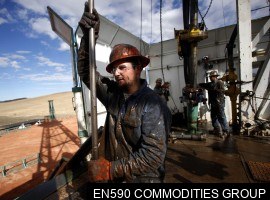
Since he came into office in January 2025, United States President Trump has been pushing oil companies to “Drill, baby, drill!” However, despite being given free rein to increase oil production, several oil and gas companies have been cautious of increasing output too much due to volatile energy prices and the huge expense of conducting new exploration and drilling operations.
Therefore, countries facing shortages, due to the ongoing geopolitical crisis between the U.S.
and Israel with Iran and other Middle Eastern powers, cannot simply turn to the United States to fix their energy problems.
The United States is the world's biggest crude oil producer, with its production reaching a record five billion barrels per year in 2025, which is over 13 million bpd.
If other fuels, such as ethanol or liquefied petroleum gases, are considered, U.S.
oil production increases to 21.2 million bpd, double that of Russia or Saudi Arabia, according to the International Energy Agency (IEA).
In recent weeks, Western oil companies have seen their profits soar as oil prices have been pushed ever higher and more governments have turned to these companies to alleviate them from the ongoing oil shortages.
The U.S.-Israeli attack on Iran in February and the ongoing war have prompted the closure of the Strait of Hormuz, a key trade corridor connecting the Persian Gulf with the Gulf of Oman and the Arabian Sea.
The strait is used to transport around20 percent of the world’s oilwhen fully operational, but only a small fraction of that has passed through the waters in the last two months.
Nevertheless, these Western oil producers are mostly unwilling to invest their high revenues into new drilling activities at present.

| Product | Price | Change |
|---|---|---|
| Brent Crude | $102.14/bbl | ▲ +0.34% |
| WTI Crude | $96.90/bbl | ▲ +0.21% |
| EN590 Diesel | $846/MT | ▲ +0.18% |
| Jet Fuel A-1 | $1090/MT | ▲ +0.55% |
| Mazut M100 | $450/MT | ▼ -0.15% |
| Bitumen 60/70 | $470/MT | ▲ +0.08% |
| Sulphur Gran 99.5% | $470/MT | ▼ -0.44% |
| Urea 46% Gran | $650/MT | ▲ +1.12% |
| NPK 16-16-16 | $460/MT | ▼ -0.28% |
| Nat Gas TTF | $15.42/MMBtu | ▲ +0.92% |
Price alerts · Industry news
Comments
Post a Comment