The Trade Routes Iran Cannot Afford to Lose
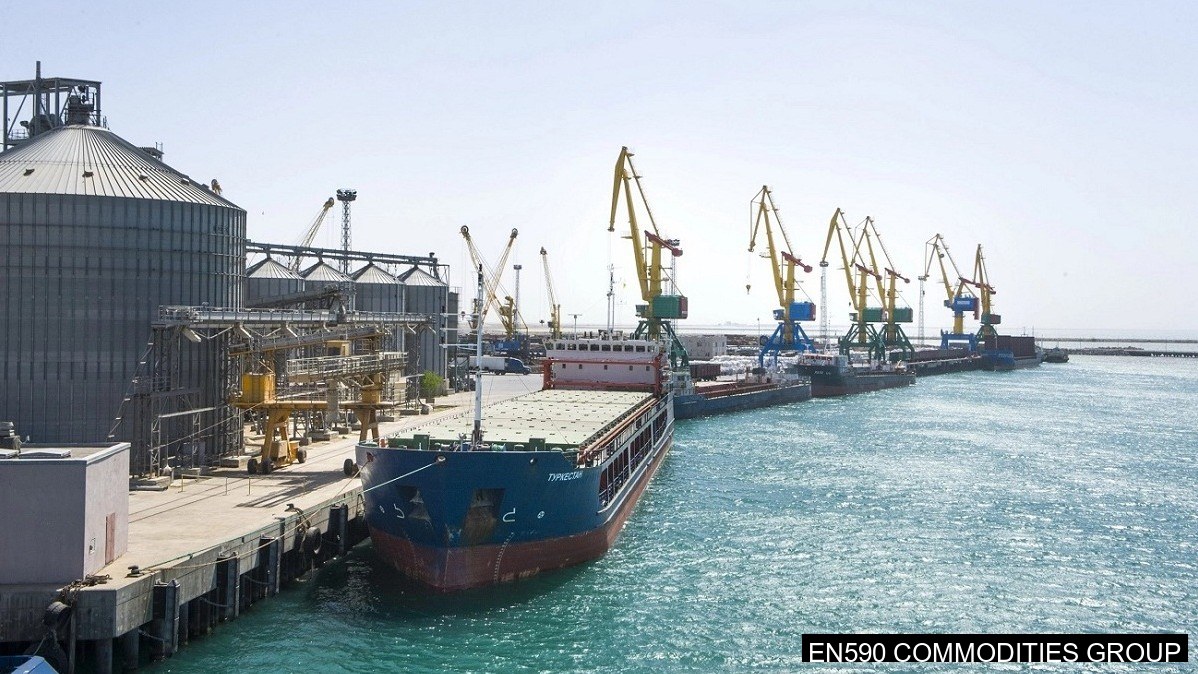
Kazakhstan Restarts CPC Oil Exports After Week-Long Black Sea Shutdown James D.
Durso is the Managing Director of Corsair LLC, a supply chain consultancy.
In 2013 to2015, he was the Chief Executive Officer of AKM… The future of relations between Central Asian republics (Kazakhstan, Kyrgyzstan, Tajikistan, Turkmenistan, Uzbekistan) and Iran under a government now dominated by the Islamic Revolutionary Guard Corps (IRGC) is likely to feature pragmatic economic and transit cooperation amid heightened caution, with short-term disruptions from the 2026 conflict and longer-term continuity driven by mutual interests in connectivity and multipolarity.
Iran's Shift to IRGC Leadership (as of mid-2026) Following the assassination of Supreme Leader Ali Khamenei and his family on 28 February 2026 by U.S./Israeli forces, his son Mojtaba Khamenei assumed the leadership role with strong IRGC backing.
ThePasdaran- particularly under figures like its commander Brigadier General Ahmad Vahidi - has emerged as thedominant forcein Tehran.
It controls key military decisions, influences negotiations, and may sideline civilian leaders like President Masoud Pezeshkian.
(Foreign Minister Abbas Araghchi and Mohammad Bagher Ghalibaf, speaker of Parliament, are Guards veterans.) The IRGC operates as a "state-within-a-state," prioritizing hardline, ideological, and asymmetric approaches (e.g., regional allies, sanctions evasion) and maycontrol 50% ofIran’s economy.
This contrasts with more pragmatic civilian or reformist tendencies but builds on Iran's 2005“Look East” policythat aimed at fostering stronger political, economic, and strategic connections with Asia.
Pre-2026 Relations: Strengthening Pragmatic Ties Before the war, relations with Central Asia were on an upward trajectory, driven by economics rather than ideology: Central Asian states pursued multi-vector policies, engaging Iran alongside Russia (EAEU), China (Belt and Road Initiative), Turkey, Europe, and the U.S.
Iran avoided policies that might destabilize the region to maintain good relations with Moscow and Beijing and to avoid a stronger U.S.
The war introduced significant short-term strains: IRGC-Specific Implications for Central Asia The IRGC has historically managed influence in theKhorasan region(bordering Turkmenistan) through intelligence networks, cultural outreach, and limited economic levers.
Unlike its heavy role in the Middle East ("Axis of Resistance"), itsCentral Asia approachhas been more restrained and pragmatic, focusing on trade, transit, and soft power to avoid provoking major powers.
| Product | Price | Change |
|---|---|---|
| Brent Crude | $102.14/bbl | +0.34% |
| WTI Crude | $96.90/bbl | +0.21% |
| EN590 Diesel | $846/MT | +0.18% |
| Jet Fuel A-1 | $1090/MT | +0.55% |
| Mazut M100 | $450/MT | -0.15% |
| Bitumen 60/70 | $470/MT | +0.08% |
| Sulphur Gran 99.5% | $470/MT | -0.44% |
| Urea 46% Gran | $650/MT | +1.12% |
| NPK 16-16-16 | $460/MT | -0.28% |
| Nat Gas TTF | $15.42/MMBtu | +0.92% |
Comments
Post a Comment