Trump Administration Picks Five States for Nuclear Fuel-Cycle Hubs
Glencore Sees $3.3 Billion Trading Profit as Iran War Rattles Oil Markets Bangladesh's $12.65 billion Rooppur nuclear… What I Cover Tsvetana Paraskova is an energy and commodities journalist who has contributed to Oilprice.com for nearly a decade, covering global energy markets, commodities,… The U.S.
Department of Energy has picked five states led by Republican governors to potentially host nuclear fuel waste in exchange for billions of dollars of support to advance manufacturing in the full nuclear fuel cycle.
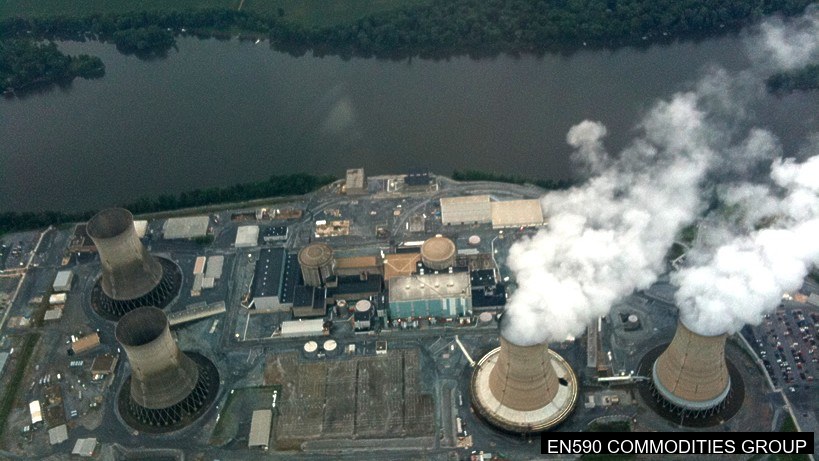
These so-called Nuclear Lifecycle Innovation Campuses are an ambitious project by the Trump Administration to store and repurpose spent nuclear fuel, support advanced reactor deployment, expand domestic manufacturing, and potentially co-host data centers.
The campuses have the potential to attract up to $50 billion in capital investment, generate as much as $10 billion in state and local tax revenue, and create nearly 25,000 jobs with the establishment of a campus, DOEsaidthis week.
The Department of Energy has picked Utah, Tennessee, Oklahoma, Louisiana, and Idaho as potential hosts of the Nuclear Lifecycle Innovation Campuses, part of the Administration’s ambition to expand America’s nuclear power industry,targeting to quadrupleU.S.
nuclear energy capacity from about 100 gigawatts (GW) now to 400 GW by 2050.Related: US Oil Inventories Sag as Hormuz Turmoil Rages On Reestablishing the United States as the global leader in nuclear energy would also need the federal government to find hosts for the nuclear waste once its purpose to fuel reactors has been fulfilled.
Campuses in the five Republican-governed states would be designed to support activities across the full nuclear fuel lifecycle, including fuel fabrication, enrichment, reprocessing used nuclear fuel, and final disposition of used nuclear fuel.
In addition, depending on state priorities and regional capabilities, the campuses may also host advanced reactor deployment, power generation, advanced manufacturing, and co-located data centers, DOE said.
Storing nuclear fuel has been a multi-decade-old issue for U.S.
Administrations, which have tried to find a solution to the problem.
There was a project to store spent fuel in Yucca Mountain in Nevada, but it was halted amid fierce opposition from the state.
The United States currentlyhas no permanent disposal facilityfor spent nuclear fuel or other highly radioactive waste.


| Product | Price | Change |
|---|---|---|
| Brent Crude | $102.14/bbl | +0.34% |
| WTI Crude | $96.90/bbl | +0.21% |
| EN590 Diesel | $846/MT | +0.18% |
| Jet Fuel A-1 | $1090/MT | +0.55% |
| Mazut M100 | $450/MT | -0.15% |
| Bitumen 60/70 | $470/MT | +0.08% |
| Sulphur Gran 99.5% | $470/MT | -0.44% |
| Urea 46% Gran | $650/MT | +1.12% |
| NPK 16-16-16 | $460/MT | -0.28% |
| Nat Gas TTF | $15.42/MMBtu | +0.92% |
Comments
Post a Comment