UAE Oil Production Nears Record High After OPEC Exit
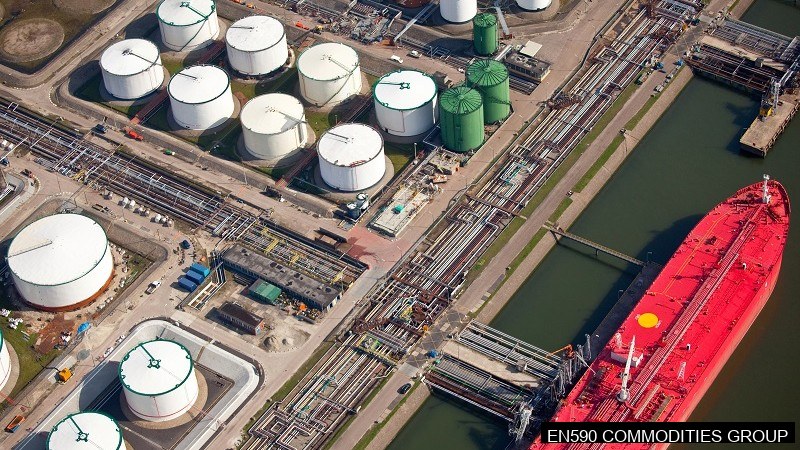
UAE Oil Production Nears Record High After OPEC Exit The UAE is wasting little time capitalizing on itsexit from OPEC,with crude production already climbing above3.8 million barrels per dayin June, its highest level in more than six years, as Abu Dhabi rapidly converts spare capacity into exports despite weaker oil prices.
Production has accelerated since the UAE formally withdrew from OPEC and OPEC+ on May 1, ending years of output restrictions that had limited its ability to fully utilize its production capacity.
Energy Minister Suhail Al Mazrouei said the UAE’s investments in upstream capacity meant the country needed to maximize returns rather than keep production offline, Reuters reported.
ADNOC has spent tens of billions of dollars expanding production capacity to 5 million barrels per day, giving the UAE one of the world’s largest sources of immediately available spare production.
The production increase comes as oil prices have retreated sharply from their Middle East war highs.Brent crude has fallen to under $72 a barrelafter briefly climbing above $120 during the conflict, while the return of Gulf exports and recovering tanker traffic through the Strait of Hormuz have renewed concerns about oversupply.
ADNOC has alsoadjusted its marketing strategyto support the production increase.
Earlier this month, the company shifted the official selling prices for its offshore Upper Zakum, Das and Umm Lulu crude grades from a Murban-linked formula to the Dubai benchmark, bringing those medium-sour grades into line with competing regional crude streams.
Reuters also reported that ADNOC has been offering discounted cargoes through tenders as it seeks to expand its customer base while additional volumes enter the market.
The UAE’s production growth stands in contrast to much of therest of the Gulf.Although OPEC output rebounded sharply in June as producers restored barrels shut in during the Strait of Hormuz crisis, regional production remains below pre-war levels.
Free from OPEC quotas, Abu Dhabi is now one of the few major producers able to continue increasing output even as oil prices weaken, putting it in a strong position to compete for market share in Asia.
Russia’s Oil Windfall Vanishes as Urals Crashes to $42 a Barrel Oil Prices Plunge as U.S.
and Iran Reach Deal to Reopen Strait of Hormuz Oil Prices Rebound as U.S.-Iran Peace Talks Are Postponed ING: Oil Prices Have Overshot To The Downside Iran Tightens Grip on Strait of Hormuz Tanker Traffic Saudi Arabia Slashes Oil Prices Again as Asian Demand Weakens Why a Supply Crunch From Iran Could Send Oil Back Below $40 a Barrel Saudi Arabia’s Decided Who Its Future Superpower Partner Is, And It’s Not the US How Fake News Became the Most Dangerous Force in Energy Markets Guyana’s Oil Boom Gets a Major Boost From $100 Crude The materials provided on this Web site are for informational and educational purposes only and are not intended to provide tax, legal, or investment advice.
| Product | Price | Change |
|---|---|---|
| Brent Crude | $102.14/bbl | +0.34% |
| WTI Crude | $96.90/bbl | +0.21% |
| EN590 Diesel | $846/MT | +0.18% |
| Jet Fuel A-1 | $1090/MT | +0.55% |
| Mazut M100 | $450/MT | -0.15% |
| Bitumen 60/70 | $470/MT | +0.08% |
| Sulphur Gran 99.5% | $470/MT | -0.44% |
| Urea 46% Gran | $650/MT | +1.12% |
| NPK 16-16-16 | $460/MT | -0.28% |
| Nat Gas TTF | $15.42/MMBtu | +0.92% |
Comments
Post a Comment