EU Locks In Plan To Triple Energy Storage Capacity By 2030
Citi Lifts Brent Outlook but Still Sees Oil Falling in 2027 Haley Zaremba is an energy journalist and researcher with more than a decade of professional experience covering global energy systems, land and natural resources, and… Europe desperately needs an energy storage revolution.
As the region gets rocked by the third energy crisis in four years, the continent’s insufficient indigenous energy systems, and backups to those systems, has become abundantly and painfully clear.
We promised things would change but here we are," a ‘highly frustrated European diplomat’ was recently (anonymously)quoted by the BBCin March.
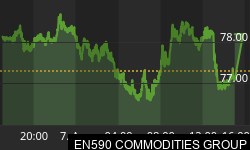
As a result, the continent is now in an incredibly precarious position that could leave the bloc highly vulnerable to widespread energy shortages, grid failures, and even matters of national security as energy becomes Europe’s adversaries' mostpotent weapon.
Getting through the next year will be a major stress test for the European Union, as the region endures historicenergy- and life-threatening heat waveswhile also scrambling to prepare for what is sure to be a ‘long, cold winter.’ Europe’s natural gas reserves are perilously low at just barely more than 50 percent capacity, and imports have stemmed to a mere trickle driven by the closure of the Strait of Hormuz, with no relief in sight.
Avoiding the next energy crisis will require Europe to ease its reliance on energy imports, thereby sheltering European markets from external conflict and market shocks.
As a result, European leaders are fast-tracking the development of indigenous energy supplies, most notably solar and wind energy.
But as intermittent renewable energies like solar and wind take up more and more of Europe’s energy mix, new energy security concerns arise.
As wind and solar are dependent on the weather, the time of day, and the season, energy demand and supply are becoming increasingly mismatched, resulting inextreme market volatilityandgrid vulnerabilities.
In response to this compounding crisis, European leaders arefinally treating energy storage as a matter of priorityfor the continent’s energy security and geopolitical stability.
In June, energy ministers signed a historic agreement to triple the European Union’s energy storage capacity, starting by adding approximately 30-35 gigawatt-hours (GW) of new capacity by 2028.
Currently, the EU has just 55 GW of installed storage capacity, a starkly scant amount compared to the estimated 200 GW of storage capacity that the bloc will need by 2030.


| Product | Price | Change |
|---|---|---|
| Brent Crude | $102.14/bbl | +0.34% |
| WTI Crude | $96.90/bbl | +0.21% |
| EN590 Diesel | $846/MT | +0.18% |
| Jet Fuel A-1 | $1090/MT | +0.55% |
| Mazut M100 | $450/MT | -0.15% |
| Bitumen 60/70 | $470/MT | +0.08% |
| Sulphur Gran 99.5% | $470/MT | -0.44% |
| Urea 46% Gran | $650/MT | +1.12% |
| NPK 16-16-16 | $460/MT | -0.28% |
| Nat Gas TTF | $15.42/MMBtu | +0.92% |
Comments
Post a Comment