Iraq’s Oil Lifeline Reopens — But Can Baghdad Trust Turkey for Even One Year?
BofA: Hormuz Needs 10 Times More Ships to Stabilize Oil Markets Simon Watkins is a former senior FX trader and salesman, financial journalist, and best-selling author.
He was Head of Forex Institutional Sales and Trading for… With over 90% of Iraq’s annual budget still coming from oil exports and historically around 95% of that crude shipped through the Strait of Hormuz, securing an alternative export route while the Strait remains effectively blockaded has become an existential matter for Baghdad.
Aside from the billions lost in immediate oil revenues for OPEC’s second-largest oil producer, the blockade meant Iraq’s domestic oil storage tanks filled quickly to maximum capacity, forcing the shutdown of several production wells.
The longer that continued, the more likely it would permanently damage Iraq’s oil production because of a loss of reservoir pressure, water infiltration, and corrosion, among other factors.
Although historically about 80% of Iraq’s oil exports have gone to key Asian buyers, especially China, the next-best alternative export route was through northern Iraq into Turkey.
The problem here was that the key agreement for Baghdad to move its oil through two pipelines into Turkey expired on 27 July.
So, where are we now on this? On 1 August, Baghdad and Ankara officially signed a one-year interim deal allowing Iraq to move its oil through the Iraq-Turkey Pipeline (ITP) corridor – comprising two separate oil pipelines but treating it as a single, unified mechanism, in line with the original 1973 Crude Oil Pipeline Agreement.
The deal signed in Ankara between Turkish state energy firm Boru Hatlar? ile Petrol Tas?ma Anonim Sirketi (BOTAS) and Iraqi state oil entities the State Organization for Marketing of Oil (SOMO) and the North Oil Company (NOC) implements a transit target of 750,000 barrels per day (bpd) of Iraqi crude -- way higher than the current 170,000-200,000 bpd level, although still only half of its 1.5 million bpd total capacity.
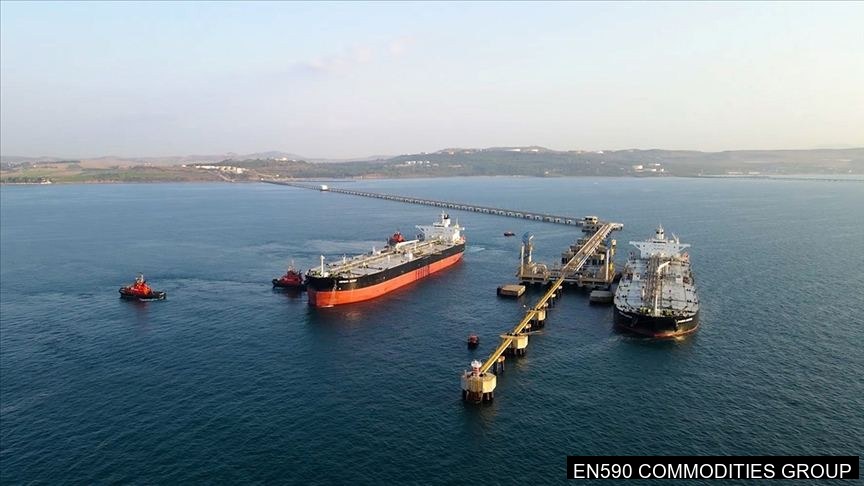
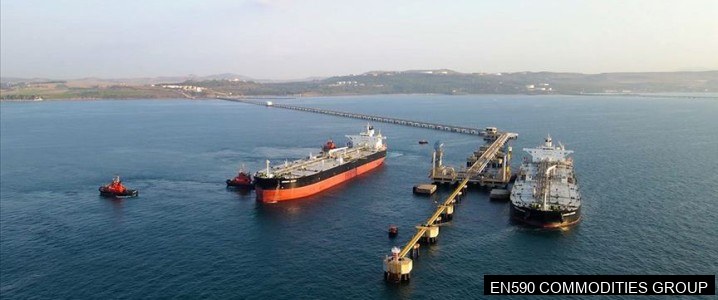
Following the signing of the deal, tanker operations resumed swiftly, withValpiaveloading over 600,000 barrels of crude at Ceyhan on 3 August, according to industry data.
The focus of these shipments will not be Asia, but on European and American buyers who can access the oil without it having to pass through a single maritime chokepoint.
Demand for Iraqi crude remains extremely strong in Western markets through this route, partly to replace Black Sea and Russian crude barrels (Iraq’s Kirkuk blend is a medium sour oil, which serves as a great substitute for these barrels) and partly due to the broader dearth of other supplies due to the effective blockade of the Strait of Hormuz.
Related: BofA: Hormuz Needs 10 Times More Ships to Stabilize Oil Markets That said, this new one-year deal may have solved Iraq’s major problem for now, but there is little reason for optimism that it will last.

| Product | Price | Change |
|---|---|---|
| Brent Crude | $102.14/bbl | +0.34% |
| WTI Crude | $96.90/bbl | +0.21% |
| EN590 Diesel | $846/MT | +0.18% |
| Jet Fuel A-1 | $1090/MT | +0.55% |
| Mazut M100 | $450/MT | -0.15% |
| Bitumen 60/70 | $470/MT | +0.08% |
| Sulphur Gran 99.5% | $470/MT | -0.44% |
| Urea 46% Gran | $650/MT | +1.12% |
| NPK 16-16-16 | $460/MT | -0.28% |
| Nat Gas TTF | $15.42/MMBtu | +0.92% |
Comments
Post a Comment