Somali Piracy Surges Amid Hormuz Blockade
Oracle’s $165 Billion Data Center Plan Hits a Gas Pipeline Delay Alex Kimani is a veteran finance writer, investor, engineer and researcher for Safehaven.com.
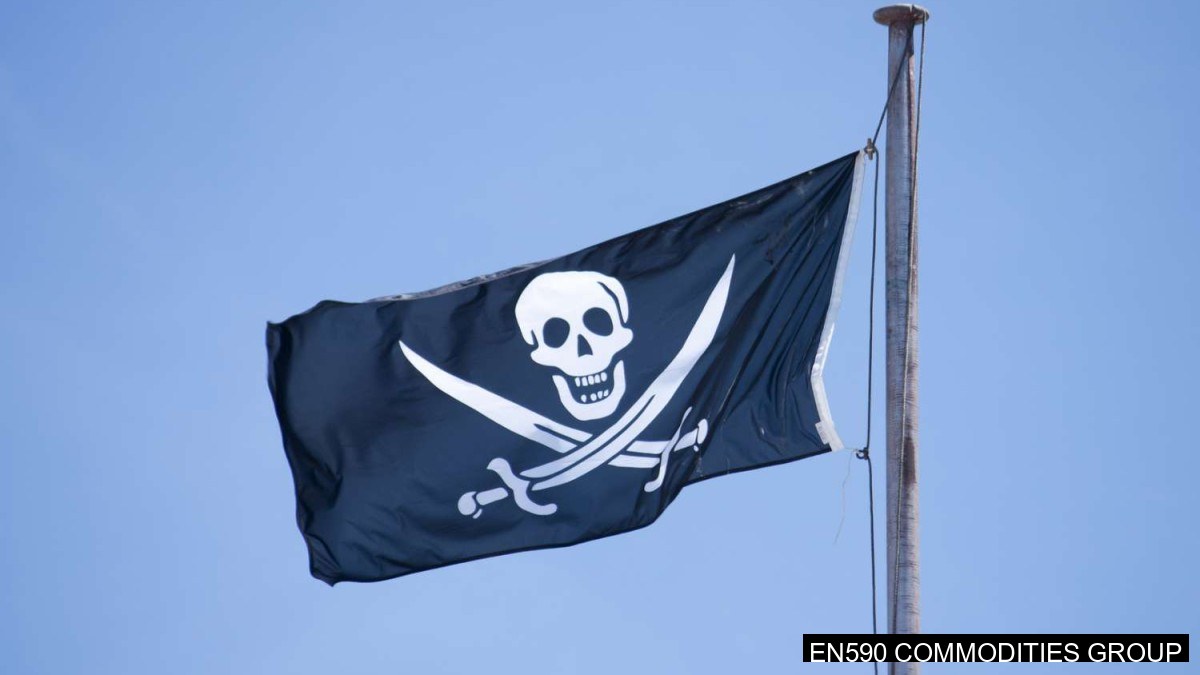
The effective closure of the Strait of Hormuz has forced hundreds of commercial ships onto longer routes around Africa, and Somali pirates are moving quickly to exploit the sudden increase in traffic off the continent’s eastern coast.
Oil tankers MT Honour 25, MT Eureka and MT Asana werehijacked in the Gulf of Adenand off Puntland between April and July 2026, the largest attacks by Somali pirates in years.
The Iran war has now delivered these groups more targets, spread across thousands of miles of ocean, while diverting naval resources to the Persian Gulf and Red Sea.
Somali piracypeaked in 2011 before an international crackdown reduced attacks to a fraction of their former levels.
The first major revival came in late 2023, when Houthi attacks in the Red Sea forced hundreds of vessels away from the Suez Canal and around the Cape of Good Hope.
forces all diverted to the war against Iran in the Persian Gulf, it’s largely a free-for-all for Somali pirates.Unlike the disorganized bands of the early 2000s, today's Somali pirates are ranging much farther from shore, and their operations have become much more sophisticated.
And perhaps even more concerning, according to reports from a UN panel of experts, there is nowdirect coordinationbetween Yemeni militants and Somali networks.
Related: South Africa’s Top Court Blocks Shell Wild Coast Exploration In exchange for creating maritime chaos to keep Western navies distracted, the Houthis have supplied Somali pirate cells with advanced weaponry, military training and precision GPS tracking devices to pinpoint commercial hulls.
Al-Shabaab--one of the most lethal terrorist groups in Africa--provides onshore logistical backing along parts of the Somali coast where pirate gangs launch operations or hold hijacked vessels.Intelligence reportsindicate the group receives a generous cut of up to 30% from successful maritime ransom payouts.
According to ajoint studyby Interpol, the World Bank and the United Nations Office on Drugs and Crime (UNODC), Horn of Africa piracy generated over $400 million in ransom payments from 179 hijacked ships between 2005 and 2012, averaging roughly $2.23 million per ship.
The money follows a structured economy, with pirate crews receiving a standard 10% to 15% fee, local financiers claim 30% to 50% for funding food, fuel and weapons, while the rest is laundered into legitimate businesses, according to the study.

| Product | Price | Change |
|---|---|---|
| Brent Crude | $102.14/bbl | +0.34% |
| WTI Crude | $96.90/bbl | +0.21% |
| EN590 Diesel | $846/MT | +0.18% |
| Jet Fuel A-1 | $1090/MT | +0.55% |
| Mazut M100 | $450/MT | -0.15% |
| Bitumen 60/70 | $470/MT | +0.08% |
| Sulphur Gran 99.5% | $470/MT | -0.44% |
| Urea 46% Gran | $650/MT | +1.12% |
| NPK 16-16-16 | $460/MT | -0.28% |
| Nat Gas TTF | $15.42/MMBtu | +0.92% |
Comments
Post a Comment