Yahoo Finance
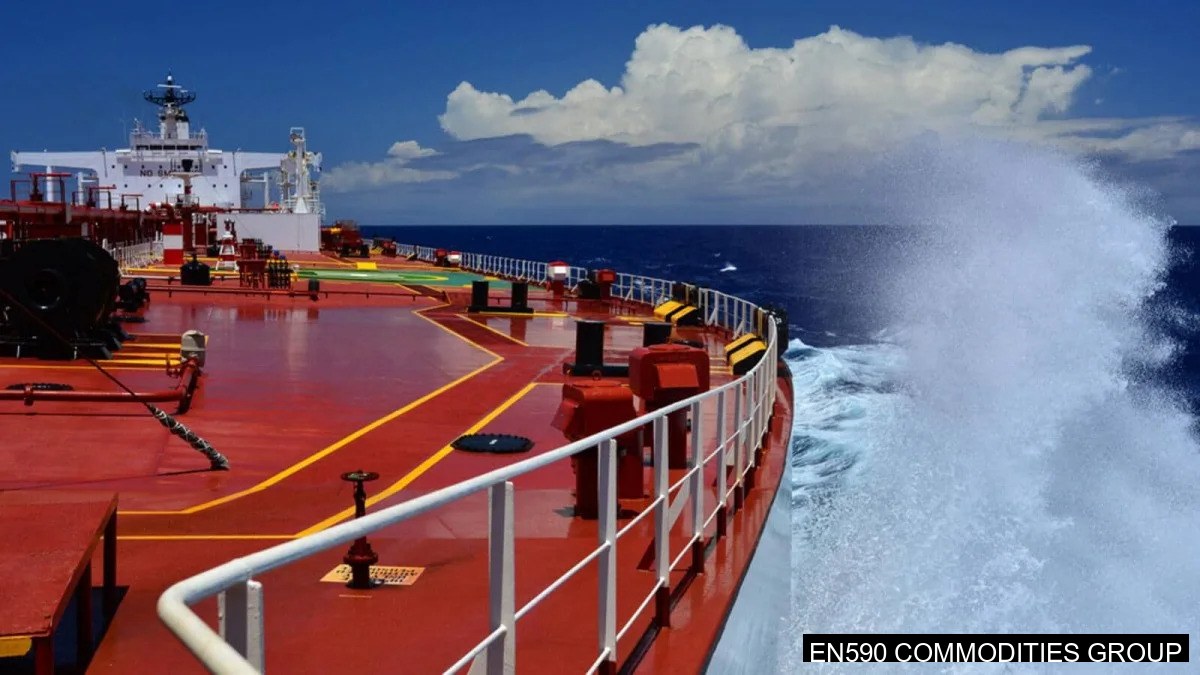
Energy Secretary Chris Wright this week said that the oil exports from the Middle East have rebounded to 15 million barrels per day (bpd) and even topped the pre-war average of 20 million bpd on Sunday.
Vessel-tracking services and commodity analysts are baffled and struggling to reconcile these numbers with their observations of tanker loadings and traffic in the region.
Ship-tracking data shows oil flows out of the Strait of Hormuz are, at best, half the volume cited by Secretary Wright.
Of all oil exports out of the Middle East, various tanker-monitoring data show a gap of between 3 million bpd and 5 million bpd, as most vessel-tracking companies are estimating only about 9 million bpd leaving the region via all its export channels so far this month, per the data compiled by Reuters columnistClyde Russell.
energy secretaryposted on Xthat oil flows from the Middle East have normalized, with Sunday traffic alone above pre-conflict averages, in a claim thatappears not to be backedby ship-tracking data.
"It is not possible to reconcile the disparity between what we see and what he is quoting," Matt Smith, director of commodity research at Kpler, toldCNN, commenting on Wright's claim.
Related: Europe's Gas Storage Crunch Deepens Ahead of Heating Season Kpler data showed earlier this week that vessel traffic at the Strait of Hormuzcontinues to declineas last week's hopes of negotiations of a U.S.-Iran deal began to fade, yet again.
Secretary Wright then doubled down on this claim,postingthat "In coordination with the U.S.
Department of Energy maintains the best available data related to oil and oil products leaving the Arabian gulf." He went on to add that "Many private businesses undercount the number of ships leaving the Strait of Hormuz due to ships moving covertly through the waterway." The U.S.
official did not reveal how "the best available data related to oil and oil products leaving the Arabian gulf" is being compiled and/or analyzed.
The private businesses tracking the shipments estimate current oil flows out of the Strait of Hormuz at up to 5 million bpd at best, and at about 9 million bpd-10 million bpd for the entire Middle Eastern region.
Energy Information Administration (EIA) said this week in its monthly Short-Term Energy Outlook (STEO) that traffic at Hormuz remains"severely constrained"and assumes this would be the case throughout August.
| Product | Price | Change |
|---|---|---|
| Brent Crude | $102.14/bbl | +0.34% |
| WTI Crude | $96.90/bbl | +0.21% |
| EN590 Diesel | $846/MT | +0.18% |
| Jet Fuel A-1 | $1090/MT | +0.55% |
| Mazut M100 | $450/MT | -0.15% |
| Bitumen 60/70 | $470/MT | +0.08% |
| Sulphur Gran 99.5% | $470/MT | -0.44% |
| Urea 46% Gran | $650/MT | +1.12% |
| NPK 16-16-16 | $460/MT | -0.28% |
| Nat Gas TTF | $15.42/MMBtu | +0.92% |
Comments
Post a Comment