Iran Opens Strait of Hormuz to China and India as U.S. Blockade Continues
EU Not Planning to Resume Russian Gas Purchases The leading economics blog online covering financial issues, geopolitics and trading.
In a significant, albeit underreported development for global energy, and for the US-Iran standoff in the Persian Gulf, the Iranian parliament has this week announced it is exempting several key trading partners from its oil transit restrictions in the Strait of Hormuz.
The move was firstunveiledTuesday by Ahmad Hayat-Moghaddam, Vice Chairman of the Iranian Parliament’s National Security and Foreign Policy Committee, at a moment when Iranian export flows are struggling under the many months-long US naval blockade of the country's ports.
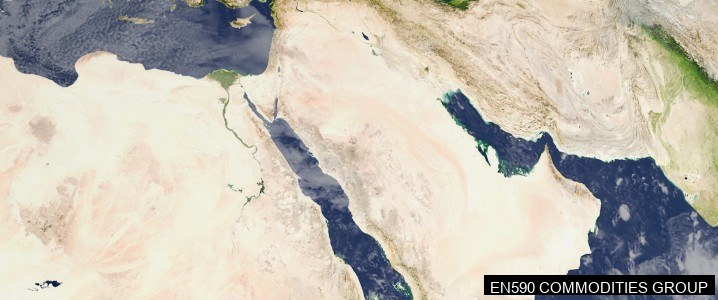
"We have currently exempted India, China, Iraq and Qatar from transit restrictions in the Strait of Hormuz.
Ships from these countries pass freely," Hayat-Moghaddam stated in an interview to the Iranian Student’s News Agency (SNA).
He described that this also aimed at shoring up "mutual interests" among countries that have long done business with one another.
The Iranian official also sought to frame the change as arising out of joint humanitarianconcerns: Tehran is facilitating the movement of Indian ships for the purpose of medicines, while Chinese ships are exempted from the restrictions to “secure” Beijing’s political support, Hayat-Moghaddam told SNA.
His comments suggested further that the US Navy doesn't block these ships from passing, which could explain how Iran has continued to get oil and wares out to global markets despite the blockade.
"The Americans do not interfere with them either," he claimed.
Elaborating on the rationale behind the decision, the lawmaker noted that the Islamic Republic does not levy transit tolls on Qatari vessels and that each exemption was granted based on specific considerations and agreements.
Hayat-Moghaddam remarked: “We are conducting business, and each of these exemptions has a distinct reason.” According to the MP, India’s exemption was designed to facilitate medicine imports into Iran, while China’s exemption aims to secure political backing from Beijing for the Islamic Republic.
October saw a record number of attacks on commercial vessels by Iran, keeping geopolitical risk elevated across the region; however, what was a near-daily pace of the attacks seems to have slowed, for now.
| Product | Price | Change |
|---|---|---|
| Brent Crude | $102.14/bbl | +0.34% |
| WTI Crude | $96.90/bbl | +0.21% |
| EN590 Diesel | $846/MT | +0.18% |
| Jet Fuel A-1 | $1090/MT | +0.55% |
| Mazut M100 | $450/MT | -0.15% |
| Bitumen 60/70 | $470/MT | +0.08% |
| Sulphur Gran 99.5% | $470/MT | -0.44% |
| Urea 46% Gran | $650/MT | +1.12% |
| NPK 16-16-16 | $460/MT | -0.28% |
| Nat Gas TTF | $15.42/MMBtu | +0.92% |
Comments
Post a Comment